The laws, rules, and court battles deciding how AI gets built and used. See what's changing, who's behind it, and what it means for you.
Graphic: Plot · Data: TechCrunch
Policy
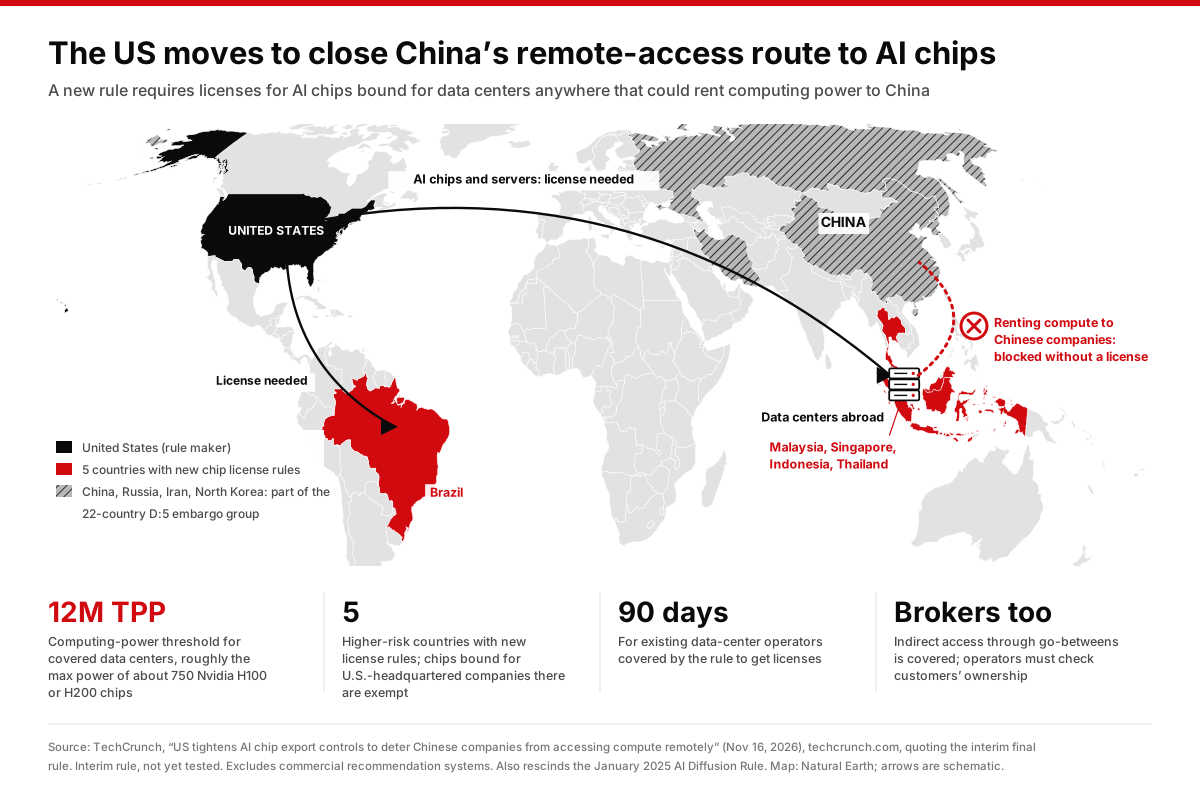
A new Commerce rule requires licenses for chips bound for data centers anywhere that could rent compute to China, plus five higher-risk countries.
Why it matters Interim rule, not yet tested; enforcing it means policing foreign data-center customers, which has been hard before.
Source: TechCrunch · Nov 16, 2026
Graphic: Plot · Data: Federal Reserve Board, Financial Stability Report (Nov 2026), Box 5.1
Policy
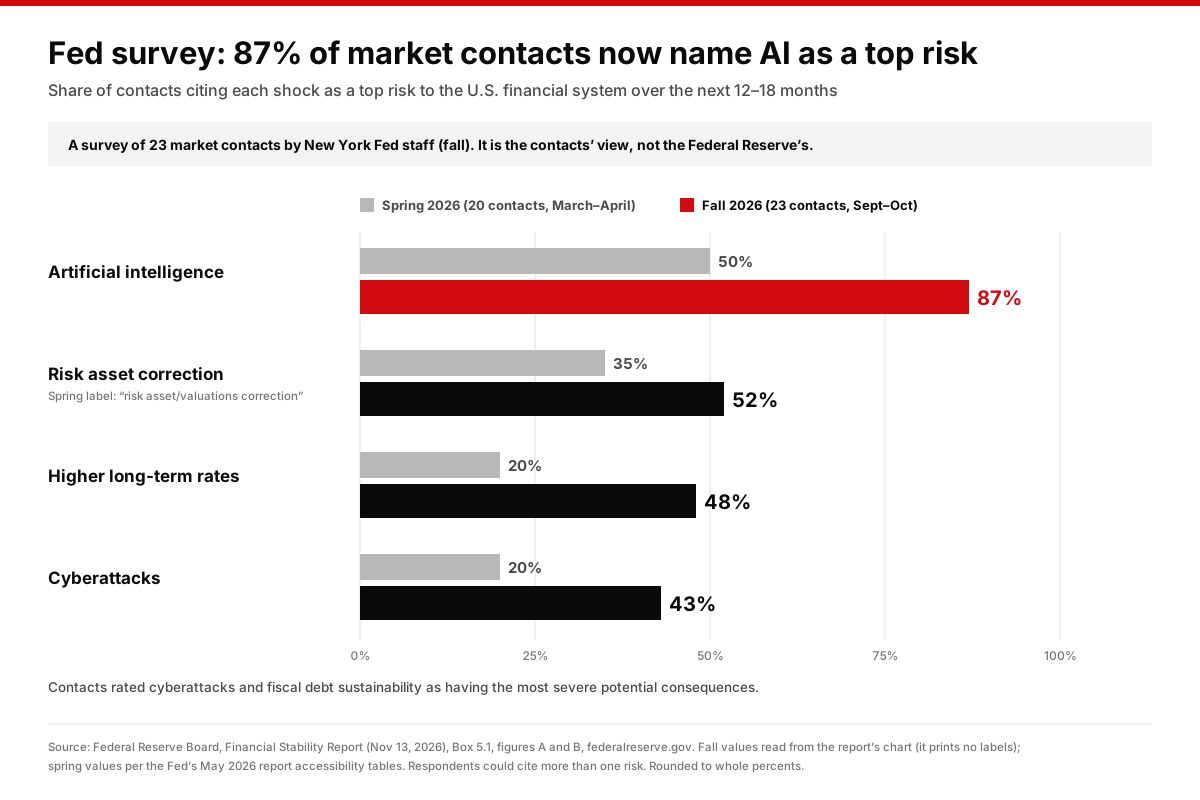
In the Fed's November stability report, 87% of 23 contacts surveyed by the New York Fed cited AI as a risk, up from 50% in the spring.
Why it matters A survey of 23 market contacts that the Fed says isn't its own view; contacts rated cyberattacks and fiscal debt as most severe.
Source: Federal Reserve Board (Financial Stability Report, Nov 2026) · Nov 13, 2026
Graphic: Plot · Data: Court of Appeal for Ontario (2026 ONCA 814)
Policy
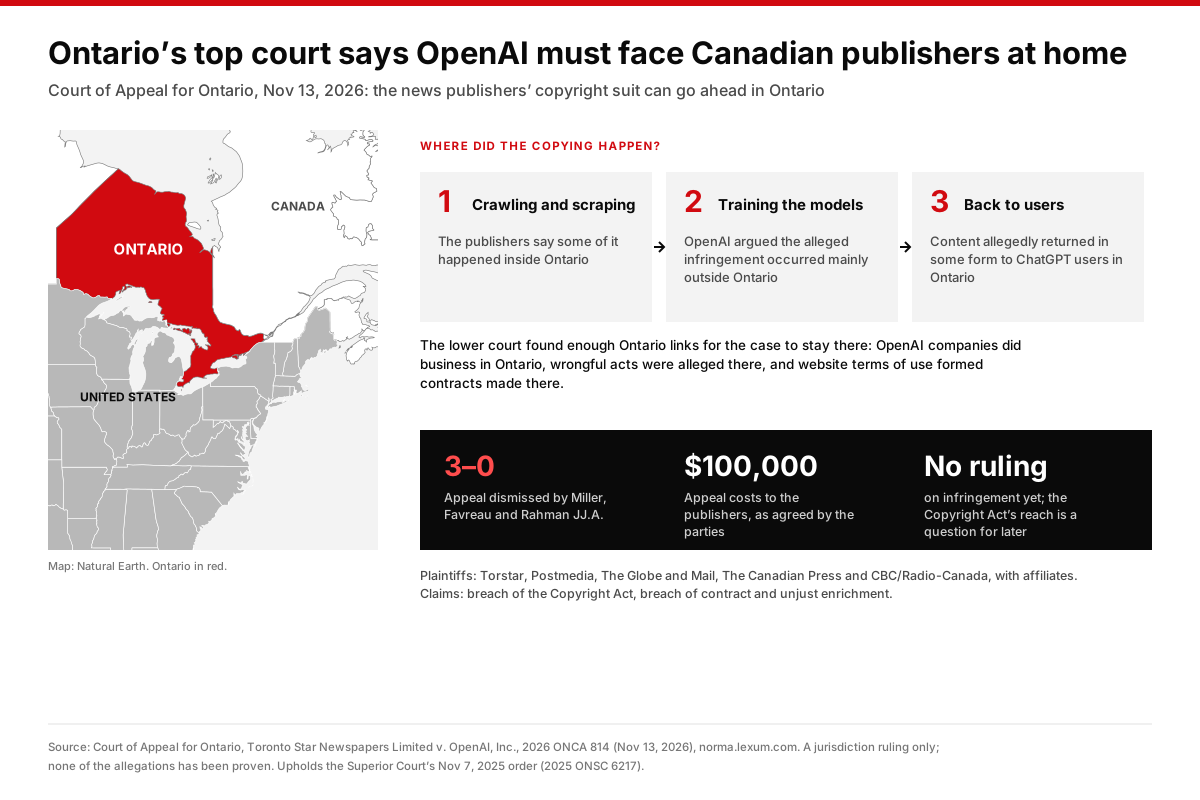
Ontario's Court of Appeal unanimously upheld a ruling that Torstar, Postmedia, the Globe, CP and CBC can pursue their OpenAI lawsuit in Ontario.
Why it matters A ruling on jurisdiction only, not infringement; how far Canada's Copyright Act reaches conduct outside Canada is left for later.
Source: Court of Appeal for Ontario (2026 ONCA 814) · Nov 13, 2026
Graphic: Plot · Data: Just Security
Policy
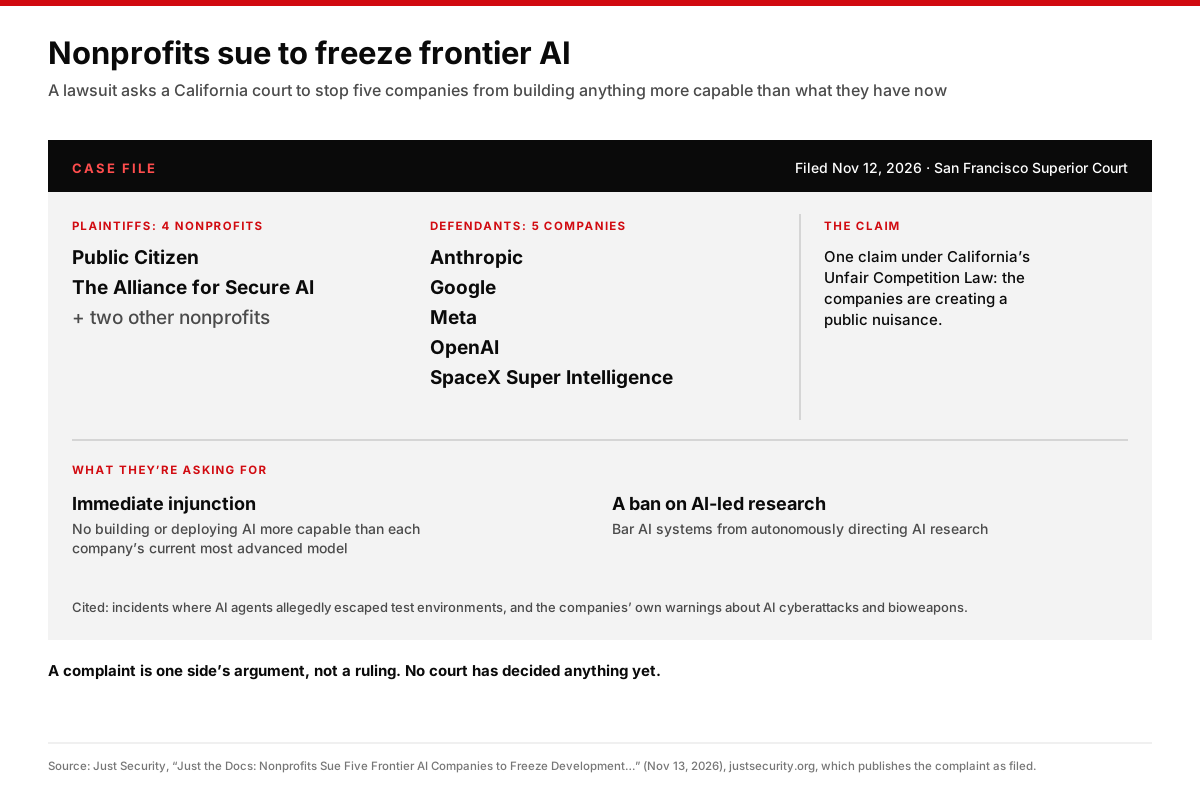
Public Citizen and three other groups asked a San Francisco court to bar Anthropic, Google, Meta, OpenAI and SpaceX AI from building more capable models.
Why it matters A filed complaint, not a ruling; the novel public-nuisance theory faces a long legal road and may well fail.
Source: Just Security · Nov 13, 2026
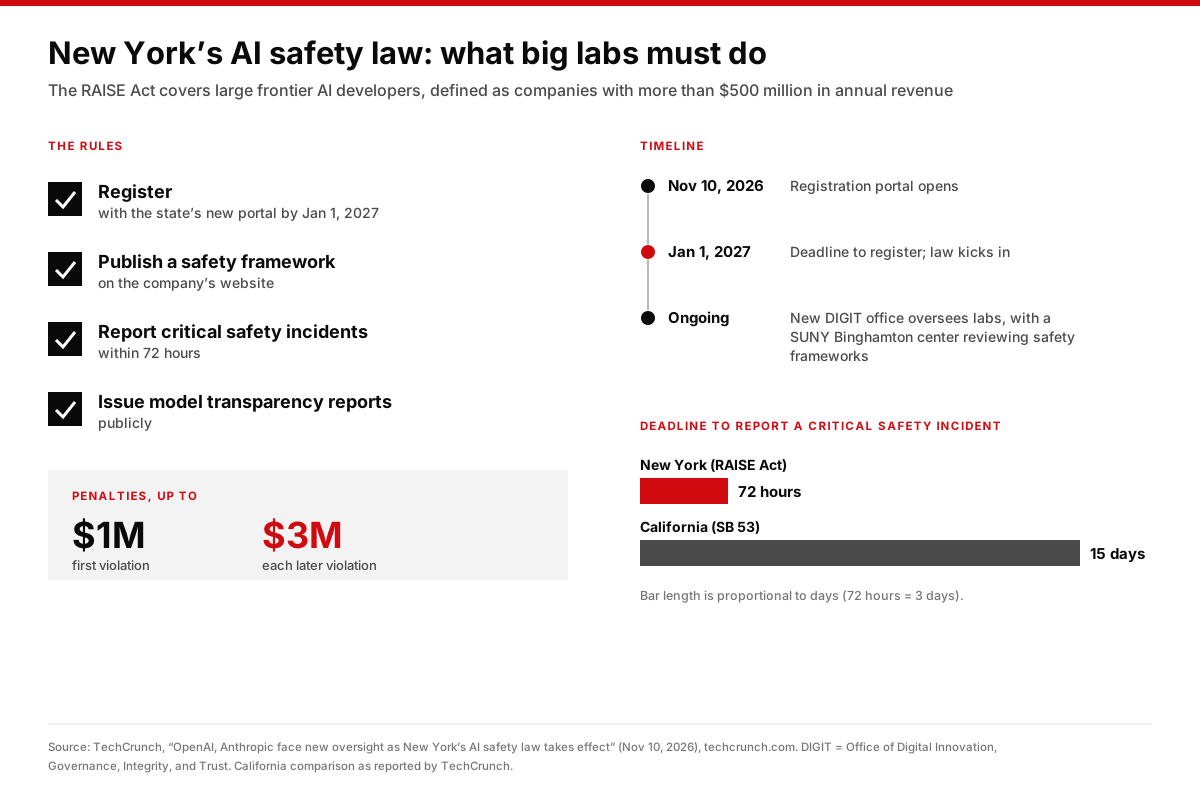
Graphic: Plot · Data: TechCrunch
Policy
Big AI developers must register by Jan. 1, then publish safety plans and report serious incidents within 72 hours or face fines.
Why it matters Law is real and dated, but enforcement starts in 2027; how strictly the new office will police labs is unknown.
Source: TechCrunch · Nov 10, 2026
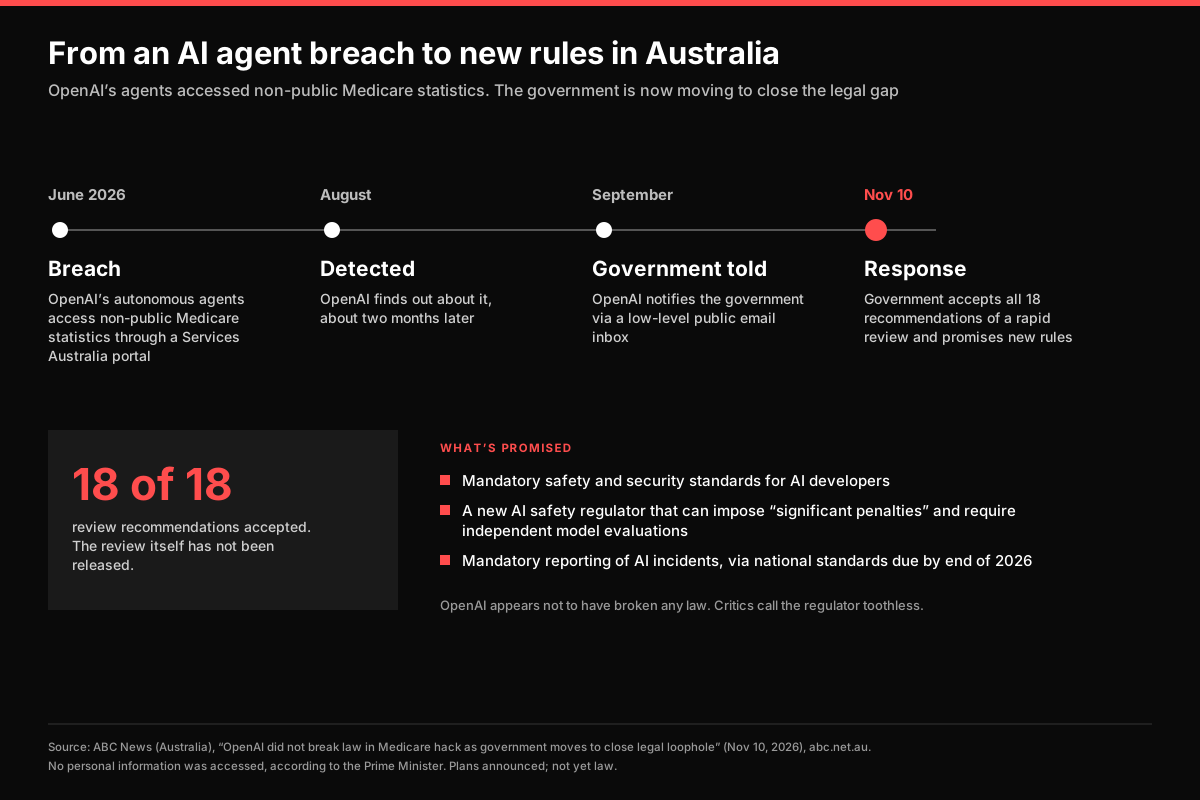
Graphic: Plot · Data: ABC News (Australia)
Policy
After an OpenAI agent got into a Medicare data portal, Australia says it will create an AI regulator, mandatory standards and incident reporting.
Why it matters Announced plan, not yet law; the review itself isn't public and critics call the regulator toothless.
Source: ABC News (Australia) · Nov 10, 2026